

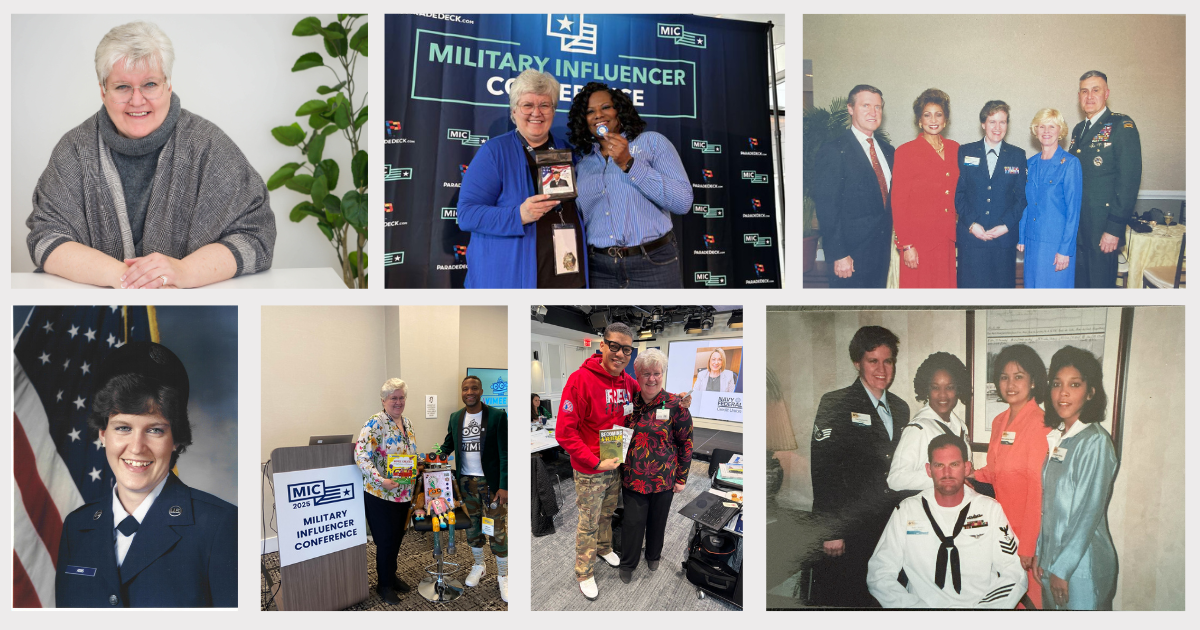
As America marks its 250th anniversary, much of the national conversation reflects on the past, founding leaders, defining victories and historic milestones. But for Air Force veteran and entrepreneur Lisa Ducharme, the more important story is still unfolding. It’s not just history, it’s a pattern. And at the center of that pattern is the veteran entrepreneur.
Through her national initiative, America 250: Celebrating Veteran Inventors, Entrepreneurs and Businesses, Ducharme is documenting 250 veteran inventors, entrepreneurs and businesses spanning from the Revolutionary War to today. What emerges is not a series of isolated success stories, but something far more consistent: a repeatable model of leadership and innovation.
“The pattern is not a coincidence,” she says. “It is a 250-year architecture of service continuing in a different uniform.”
Proven Patterns
Ducharme’s research points to a shared set of traits that transcend era, industry and background. From George Washington shaping early infrastructure to Fred Smith redefining logistics and Grace Hopper advancing modern computing, the same core principles appear again and again.
She identifies four: mission-first execution, disciplined resource allocation, people-centered leadership and long-term thinking. These are not abstract concepts, they are direct extensions of military training.
“The military builds it. Veterans live it. But nobody names it,” she explains.
This “architecture of success” forms the foundation of her Legacy Gallery, a growing database designed not only to recognize veteran innovators but to create a practical model others can follow.
Identity Advantage
For Ducharme, the work is also personal. After retiring from the Air Force, she faced a civilian workforce that often failed to recognize the value of military experience. Like many veterans, she was encouraged to “translate” her background into more conventional terms.
Over time, she realized that approach missed the mark.
“We have spent decades telling veterans to minimize their veteran identity,” she says. “The evidence shows the opposite is true.”
Rather than translation, she advocates recognition. The qualities developed through service, leadership, accountability and mission clarity, are not barriers. They are competitive advantages.
That shift in perspective is critical, especially as veteran entrepreneurship continues to decline. Ducharme points to what she calls the Veteran Business Cliff, a drop from nearly half of returning service members starting businesses after World War II to fewer than 5% today.
Community Impact
Veteran-founded businesses extend beyond profit. They generate measurable community impact, particularly among military-connected populations and underserved areas.
According to the Institute for Veterans and Military Families (IVMF), 35% of employees in veteran-owned businesses are fellow military-connected individuals, and nearly half of veteran entrepreneurs identify as social entrepreneurs focused on solving community challenges.
“The oath of service does not have an expiration date,” Ducharme says. “Veterans don’t stop serving, they find a new theater of operations.”
From job creation to innovation in health care, logistics and technology, these businesses often serve as economic anchors, especially in rural and overlooked communities.
Narrative Shift
Ducharme also sees a need to change how veteran success stories are told. Too often, narratives fall into extremes: the struggling veteran in need of support, or the exceptional hero whose achievements feel out of reach.
Both, she argues, miss the broader reality.
“The gap I am trying to fill is the gap between commemoration and activation,” she explains.
Her goal is to transform inspiration into instruction, turning 250 years of veteran success into a practical playbook for future entrepreneurs.
What Comes Next
With the nation’s 250th milestone now reached, Ducharme believes the focus must move forward. The next chapter is not just about honoring service, but about equipping veterans to lead in new ways, as founders, innovators and builders.
Her long-term vision includes expanding the Legacy Gallery into a national curriculum, influencing transition programs and positioning entrepreneurship as a primary pathway for veterans entering civilian life.
“The mission does not end when the uniform comes off,” she says. “It transforms.”
If history offers any indication, the next era of American innovation will not simply include veterans, it will be driven by them.
Read more articles for the Veteran Community here.