

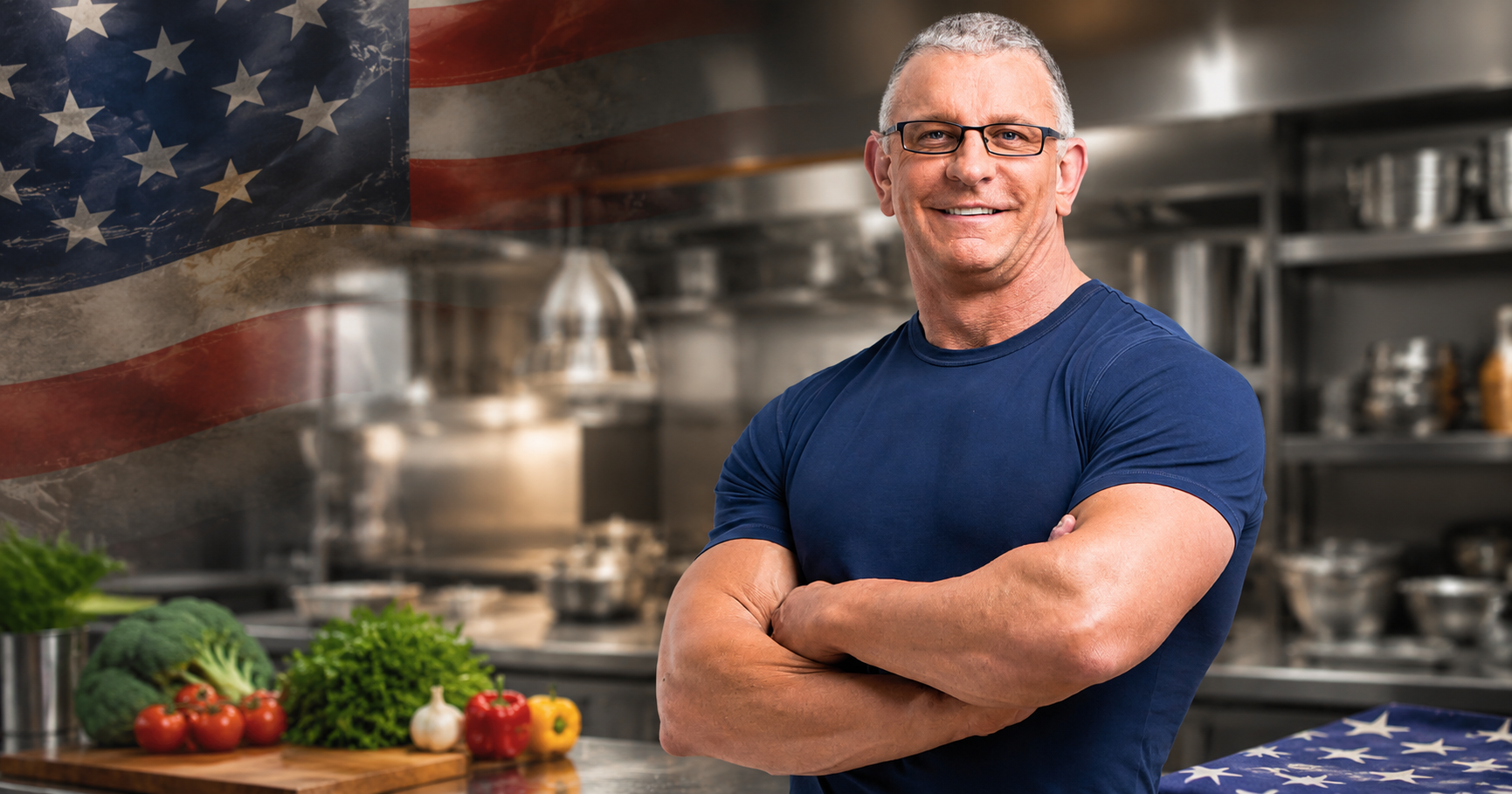
When Chef Robert Irvine first appeared on the cover of U.S. Veterans Magazine in 2017, his commitment to the military and veteran community was already unmistakable. Nearly a decade later, that commitment hasn’t slowed—it has evolved.
While Irvine has continued to grow his business ventures, write books and remain a familiar face on television, some of his most meaningful work happens alongside service members, veterans, first responders and their families. Through the Robert Irvine Foundation, he identifies unmet needs and helps create practical solutions that strengthen the military community.
It is why U.S. Veterans Magazine is honored to feature Irvine on its cover for a second time. Since readers last saw him here, his reach has expanded, his leadership has evolved and the Robert Irvine Foundation has continued to respond to the changing needs of those who serve.
“The thing I’m most proud of is that we’ve never given up,” Irvine said.
That determination has allowed the foundation to evolve alongside the changing needs of the military community while remaining grounded in its original purpose: serving those who serve.

Chef Irvine serving Thanksgiving dinner to U.S. soldiers, NATO allies and civilians at Mihail Kogălniceanu Air Base in Romania. SPC. BREANNA BRADFORD
VIEW, ENJOY & SHARE THE DIGITAL MAGAZINE—FEATURING OUR EXCLUSIVE COVER STORY!
Serving with Purpose
More than a decade after launching his foundation, Irvine continues to be guided by a simple question: What does the military community need now?
Mental health and suicide prevention remain among his greatest concerns. While he recognizes the work already being done by veteran service organizations and prevention coalitions, he believes future progress depends on understanding people as individuals.
“We’ve got to get better at the science and understanding how to meet the needs of each individual,” he said. “It’s too complex of an issue to be fixed with a one-size-fits-all approach.”
One of the simplest tools for creating those conversations has been food.
“I’m a cook. I make eggs,” Irvine said with a laugh.
Yet sharing a meal has become one of the most effective ways to bring people together, lower barriers and encourage conversations that might not otherwise happen.

Chef Irvine celebrates Thanksgiving with service members representing multiple branches at Marine Corps Air Station Cherry Point. HELM CREATIVE STUDIO
Fueling Readiness
That philosophy eventually led Irvine to a larger question: Why wasn’t the military placing the same emphasis on nutrition that it placed on equipment and technology?
“We think about tanks and planes and trains and submarines and rifles,” Irvine said. “Yet we’ve forgotten about the human being and what they need—and that starts with food.”
For Irvine, nutrition isn’t simply about improving morale. It’s about military readiness.
He believes nutrition deserves the same level of strategic attention as equipment, technology and training. Service members are expected to perform physically and mentally in demanding environments, often for long hours and under significant stress. Providing convenient, nutritious meals isn’t simply about improving the dining experience—it helps ensure the force is properly fueled to meet those demands.
That philosophy has shaped Irvine’s work with military leaders as they rethink how dining can better support the health, performance and readiness of today’s force. Rather than relying on traditional serving lines and prepared food that may sit for extended periods, newer concepts emphasize made-to-order meals, greater variety and faster service. The goal is to create an experience that encourages service members to eat on base because the food is both appealing and nutritious.
His analogy is straightforward.
Give someone a brand-new Mercedes and fill it with olive oil. It won’t go very far.
The same principle applies to the men and women expected to operate some of the world’s most advanced military equipment. Without proper nutrition, performance inevitably suffers.
Working alongside military leaders, Irvine has become an advocate for modernizing Army dining facilities through campus-style concepts featuring made-to-order meals, multiple serving stations and healthier options that service members actually want to eat.
He’s quick to point out that this isn’t about serving what he jokingly calls “rabbit food.” Young service members have choices. If installation dining facilities don’t provide appealing, nutritious meals, they’ll eat somewhere else.
The goal is to make military dining a destination rather than an obligation.
According to Irvine, six dining facilities have already been renovated, with additional projects underway. The updated model not only improves the dining experience but also reduces food waste, increases efficiency and better supports the health and performance of today’s force.
He believes the opportunity extends beyond the Army as other branches evaluate ways to modernize their own food programs.

Robert Irvine encourages a veteran during a Robert Irvine Foundation fitness event. HELM CREATIVE STUDIO
Leadership that Listens
While television audiences know Irvine for his intensity, experience has changed the way he leads.
Earlier in his career, he often focused on identifying problems and delivering immediate solutions. Today, he spends more time asking questions before offering answers.
Experience has taught him that lasting solutions begin with understanding another person’s perspective before trying to solve the problem.
That philosophy shaped his 2023 book, Overcoming Impossible, which encourages readers to better understand themselves before trying to change their circumstances.
“God gave us two ears and one mouth for a reason,” Irvine said. “You should listen twice as much as you speak.”
That lesson has also influenced how he views leadership.
He has little patience for leaders who believe they must be the smartest person in the room. Instead, he believes great leaders surround themselves with talented people, trust their expertise and create environments where everyone succeeds.
“If you listen to somebody that’s smarter than you, you’ll go a lot farther,” he said.
Life After Service
Irvine offers similar advice to veterans preparing for civilian life.
Rather than chasing the biggest paycheck or assuming their next career must mirror their military job, he encourages service members to take time to identify what truly motivates them.
 Write down what you enjoyed about military service. Think about what matters most to you and your family. Consider the kind of work that gives you purpose.
Those answers, he believes, will point toward a more fulfilling career than salary alone.
He also encourages veterans to give their families time to adjust. Military life shapes an entire household, and transitioning to civilian life affects everyone—not just the service member.
Nearly a decade after appearing on his first U.S. Veterans Magazine cover, Irvine’s platform continues to grow, but his focus remains remarkably consistent. Whether he’s improving military dining, supporting veterans through his foundation or mentoring future leaders, he continues to look for practical ways to make a difference.
“Find something that you really want to do, and you love to do it,” he said. “Because then you don’t work.”
Read more articles for the Veteran Community here.