

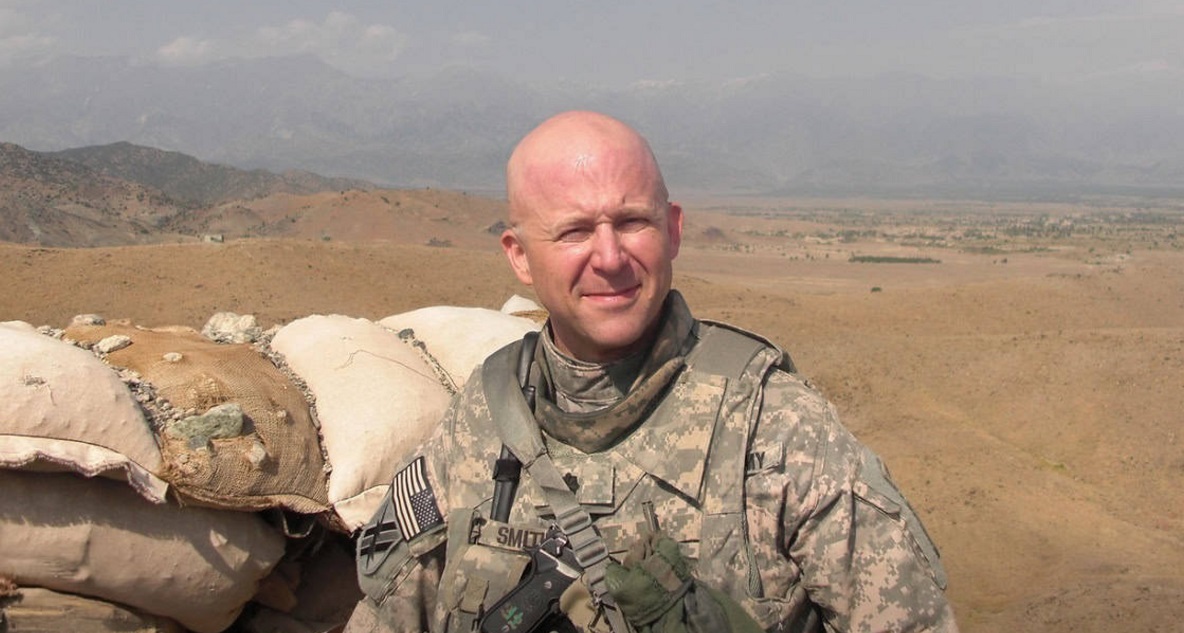
After more than three decades of military service, Major General (Ret.) Matt Smith has built a career defined not by rank, but by relationships. Today, as the Executive Director of Veterans Initiatives at Emory University, he applies the leadership principles he refined in high-stakes environments to help veterans navigate one of the most complex transitions of their lives: moving from military service to civilian careers.
Smith’s 32-year career in the Army and Army National Guard placed him in roles requiring coordination across agencies, teams and missions. In his final assignment, he led Joint Task Force North, aligning efforts across 18 federal agencies without direct authority. That experience reinforced a defining lesson: leadership is rooted in influence, not control.
“Authority gets you compliance, while trust earns you commitment,” Smith said, a principle that continues to guide his work with veterans today.
Redefining Service
Smith’s own transition into civilian life gave him firsthand insight into the challenges many veterans face. While support systems are extensive, the volume of resources can be overwhelming and difficult to navigate.
Rather than stepping away from service, Smith chose to redefine it. After earning his MBA from Emory University’s Goizueta Business School, he returned to an environment where he could continue serving—this time by helping veterans translate their leadership experience into meaningful civilian careers.
At Emory, Smith leads the Master of Business for Veterans (MBV) program, a specialized graduate program designed for experienced military leaders. Unlike traditional MBA programs, MBV recognizes that veterans are not starting from scratch. Instead, it builds on decades of leadership, decision-making and operational experience.
Translating Leadership
One of the most significant barriers veterans encounter is not capability—it is translation. Each year, approximately 200,000 service members transition into civilian life, many with extensive leadership experience that does not align neatly with corporate job descriptions or academic expectations.

Smith describes this disconnect as a language gap. Veterans understand leadership through mission execution, team dynamics and accountability under pressure, while civilian employers often rely on different terminology and frameworks.
To bridge that gap, the MBV program focuses on helping veterans communicate their value in ways that resonate with employers and academic institutions. Smith often encourages veterans to reframe how they present their experience.
“You have a Ph.D. in the human condition,” he said, underscoring the depth of leadership insight veterans bring.
Unlocking Potential
Smith believes veterans represent one of the most underutilized leadership pipelines in the United States. Their ability to operate in uncertain environments, make decisions under pressure and align diverse stakeholders positions them for roles across industries—from middle management to executive leadership.
Unlocking that potential requires a shift from both veterans and employers. Smith emphasizes that organizations must recognize military leadership as professional experience and intentionally integrate veterans into roles where their skills can be fully leveraged.
Continuing the Mission
For Smith, the work is deeply personal. His career has come full circle—from leading troops in complex operations to mentoring veterans as they build their civilian careers.
His message to those preparing to leave the military is clear: seek guidance from those who have already made the transition. While the process can feel uncertain, it does not have to be navigated alone.
Through his work at Emory, Smith continues to serve—ensuring that leadership forged in uniform is not lost in translation, but recognized, refined and applied to shaping the future of American business.