

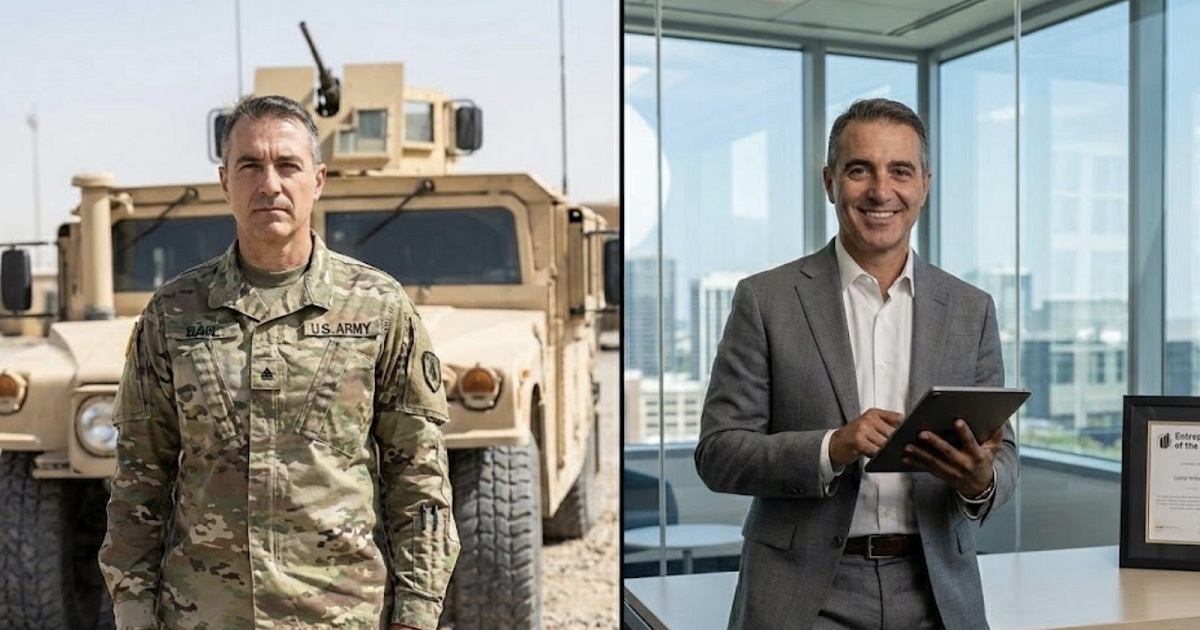
The transition from military to everyday life is often more disorienting than many people will admit. I know because I’ve lived it. Coming from a structured life with military norms, values and language into civilian life is hard.
Sure, you’re trained, experienced and disciplined. But you’re now out of structure and out of mission. It can be overwhelming. You’re not alone. According to Laguna Treatment Center, up to 44% of veterans report having difficulties transitioning from military life.
You’re not struggling because you don’t have what it takes. You’re struggling because you don’t yet have a framework to repurpose the transition. Take it from someone who was a Gulf War officer, Bronze Star recipient, team leader, engineer and business owner. Without a framework, I would still be lost today.
Clarity Is the New Mission
Many of us feel lost after service because we lack clarity on a new mission.
In the military, the mission is clear. In life, it’s rarely that simple. A lack of clarity can feel like failure, but it’s not.
Create your own North Star. If you’re waiting for someone to hand it to you, you’re never going to find it. In my book, The Berenyi Life Blueprint, I teach the importance of finding purpose. Start by writing a new statement and defining what success looks like on a personal level. Once you find your purpose, work becomes meaningful and everything changes.
If you’re asking, “How do I find my purpose?” let go of the myth that it’s a quick formula. Spend time with yourself. Envision who you want to be. If money and time were no object, what would you do?
Discipline Still Wins
The outside world is not as structured as the military, and life is often chaotic. But your discipline still gives you an edge.
Even simple actions like waking up early, showing up early and doing more than expected can be an asset. For me, this is what helped me outwork competitors.
I credit my upbringing on a Montana farm and my service for this. In both, I learned hard work, consequences and the value of taking responsibility. Reframe discipline as a market differentiator, whether for business or everyday life.
Relationships Build Trust
It’s common to feel isolated after service. You spent years with your team, relying on shared experiences that civilians often don’t understand.
Civilian relationships can feel transactional. Build trust the same way you did in the military: show up consistently over time.
That is what I did when building long-term client trust. I treated leadership as relationship stewardship and professional connections as long-term assets. Genuine care builds unbreakable trust, especially under pressure.
Don’t Just Get a Job, Lead
Veterans are trained for leadership, even under fire. I learned the value of speaking truthfully and clearly about goals and problems and communicating in a controlled, reassuring way under stress.
I also learned that courageous leaders persist even when things are difficult or unpopular. When mistakes were made, I didn’t make excuses or look for someone to blame. I took responsibility, learned and carried that mindset into building an engineering firm and eventually Berenyi Consulting.
Instead of settling for what fits the résumé, consider what builds a legacy. Aim bigger, even if it feels risky. A good leader seeks excellence and continuous improvement, defines clear standards and holds everyone, including themselves, accountable.
Pressure Is Familiar, Use It
Transitioning to civilian life isn’t less pressured; it’s just different pressure. But pressure is not foreign to you.
Years after building my business, a wrongful incarceration had me losing everything I had built. I could have buckled or blamed someone else. But I didn’t. I used that pressure to move forward, rebuild, learn everything I could and serve at a higher level.
With the right mental tools, such as faith, coaching or journaling, you can harness pressure rather than fear it.
A New Season, Not a Lesser One
 Leaving the military isn’t the end of the mission. It’s another chapter and the start of ownership. Veterans don’t need sympathy. Veterans need structure. They need belief and a personal blueprint.
Tony Berenyi is a Gulf War veteran, an executive coach at Berenyi Consulting and a former business owner who led an industrial engineering and construction firm for more than 30 years. Photo: Tony Berenyi COURTESY OF TONY BERENYI
Read more articles for the Veteran Community here.