

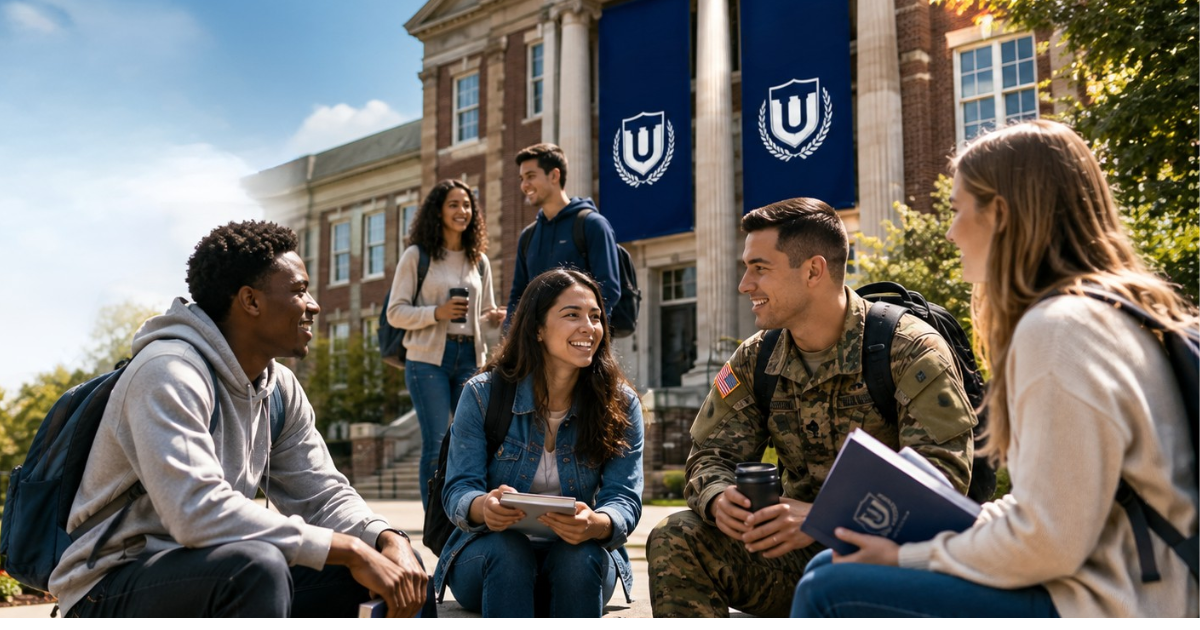

Across the United States, a growing number of universities are redefining how they support those who have served. While the Post-9/11 GI Bill has expanded access to higher education, leading institutions are building comprehensive systems that address the academic, professional and personal transitions veterans face when entering civilian life. From resource centers to career pipelines and peer networks, these universities are raising the standard.
National Model
At Syracuse University, that commitment is evident in both the infrastructure and the approach. The university is home to the Institute for Veterans and Military Families (IVMF), a nationally recognized organization focused on research, policy and programming for veterans. Its National Veterans Resource Center serves as a centralized hub for academic advising, career training and community support.
The university’s model reflects a broader mission: connecting veterans to long-term career pathways. Syracuse has been consistently recognized as a top institution for veterans.
Scaling Support
At Arizona State University, scale and accessibility define its veteran support efforts. The Pat Tillman Veterans Center provides services ranging from benefits assistance to personalized success coaching. Named after former NFL player and Army Ranger Pat Tillman, the center reflects a mission grounded in service and leadership.
Arizona State enrolls one of the largest veteran student populations in the country. Its approach balances efficiency with individualized support, earning consistent recognition in national rankings.
Academic Transition
At the University of Texas at Austin, veteran support is closely tied to academic integration. The university offers specialized advising, financial aid coordination and transition services designed to help veterans navigate both coursework and campus life.
These programs focus on bridging military experience with academic expectations, helping ensure student veterans are positioned for success. The university is regularly included in Best Colleges for Veterans rankings by U.S. News & World Report.
Campus Community
At the Pennsylvania State University, the community plays a central role. Veteran lounges, peer mentoring and student organizations help foster connection and engagement.
Penn State also offers robust online learning options, making education more accessible to active-duty service members and veterans who balance other responsibilities. Its continued presence in national rankings reflects a sustained focus on both access and student experience.
Career Access
On the West Coast, the University of Southern California has built one of the largest veteran populations among private universities. USC participates in the Yellow Ribbon Program, helping cover tuition costs that exceed GI Bill limits, and provides career counseling and alumni networking.
Strong industry connections offer pathways into post-graduation employment, reinforcing the role of higher education in a broader career transition.
Future Focus
While each institution approaches veteran support differently, several common elements stand out. Dedicated resource centers provide a central point of access. Career services translate military experience into civilian credentials. Financial aid offices help maximize federal benefits. Peer networks create a sense of belonging that supports long-term success.
Research from the U.S. Department of Veterans Affairs highlights the importance of these systems, noting that veterans often face challenges related to mental health, identity and career adjustment.
As more veterans pursue higher education, these universities offer a blueprint for meaningful support. The focus is shifting from access alone to long-term outcomes, ensuring that student veterans are equipped to graduate, build careers and continue their service in new ways.