

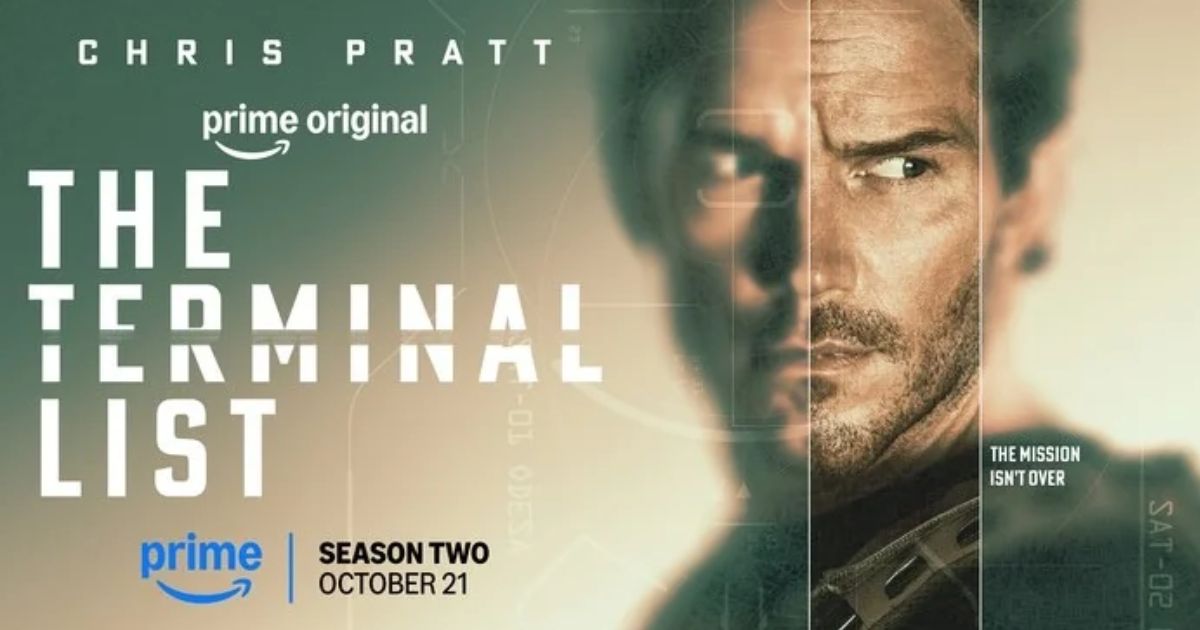
In an exclusive interview with U.S. Veterans Magazine, Jack Carr, Jared Shaw and David DiGilio discuss military authenticity, second careers and the teamwork behind the hit series.
By Danielle Jackola, Senior Managing Editor
When former Navy SEAL Jack Carr first stepped onto the set of The Terminal List, he was struck by something unexpected: Making a television series wasn’t all that different from conducting a military operation.
There was a director overseeing the production, specialists responsible for weapons and explosives, medical personnel on standby and a team of people relying on one another to execute a shared mission. Even the food services had a familiar counterpart: the military galley.
For Carr, the parallels went beyond organizational structure. They reflected the same emphasis on preparation, trust and teamwork that had defined much of his military career.
Now, as The Terminal List returns for its second season on Prime Video, that approach remains central to the production.
In an exclusive interview with U.S. Veterans Magazine Senior Managing Editor Danielle Jackola, Carr, fellow Navy SEAL veteran Jared Shaw and showrunner David DiGilio discussed the responsibility of representing military life authentically, the veterans helping shape the series and the possibilities that come with a new career after service.

(L-R) Tom Hopper, Global Head of Marketing, Amazon MGM Studios Sue Kroll, Jared Shaw, Chris Pratt, Dar Salim, Constance Wu, Jack Carr, David DiGilio, Global Head of Television, Amazon MGM Studios Peter Friedlander and Gabriel Luna attend Prime Video’s The Terminal List Season 2 Premiere in New York City. Courtesy Valerie Terranova/Getty Images.
Getting It Right
Based on Carr’s second James Reece novel, True Believer, the new season follows Chris Pratt’s portrayal of the former Navy SEAL commander as he searches for purpose after the devastating events of Season 1. The revenge story that introduced audiences to Reece expands into an international espionage thriller, but Carr was determined that the character would not remain unchanged.
“He had to learn to live again,” Carr said.
The first novel centered on what Carr described as revenge without constraint. This chapter, he explained, explores “violent redemption,” allowing Reece to draw on his military experience while discovering a different way to use his abilities.
For the men bringing that story to television, authenticity is a responsibility that extends well beyond convincing action sequences.
Shaw, who serves as an actor, writer, producer and technical adviser within the franchise, emphasized the importance of details that civilian audiences might overlook but veterans immediately recognize.
“If we get those small details wrong,” Shaw explained, viewers with military experience can quickly lose their connection to the story.
That attention extends to how service members communicate, the relationships they develop and the environments in which the characters operate. At times, the production also makes deliberate creative adjustments to protect sensitive military tactics or connect elements of the storyline.
Shaw affectionately referred to those liberties as adding a little “Hollywood hot sauce.”
The goal, however, remains consistent: Tell an entertaining story without sacrificing the trust of the military community.
Team Television
Behind the camera, firsthand military experience contributes to far more than technical accuracy.
DiGilio described the production’s collaborative approach as “team television,” a philosophy shaped in part by the veterans working alongside the show’s writers, actors and production crews.
“They are extremely collaborative. They are exceptional communicators. They can deal with task saturation,” DiGilio said of the veterans involved.
Those strengths are particularly valuable in television, where long production days, constantly shifting demands and complicated logistics require people to make decisions together.
The team has also sought to create an environment where contributions are valued regardless of position.
“We don’t just want to make new shows. We want to make a new way to make shows,” DiGilio said.
For veterans considering careers in entertainment, that philosophy offers another reminder that military experience can translate into unexpected professions.
New Chapters
For both Carr and Shaw, their work in entertainment represents a new chapter built upon interests that existed before they left military service.
Shaw had long been drawn to acting and storytelling. While serving as a military instructor in California, he met Pratt, who was preparing for a film role. The two developed a friendship that helped open doors to the entertainment industry.
But Shaw also invested in learning the craft himself, quietly traveling to Los Angeles for acting classes while still serving.
“I was sneaking up once a week to LA and taking acting classes for two years without telling anybody that I worked with,” Shaw recalled.
That willingness to become a student again remains central to the advice he offers others pursuing creative careers: Develop the skills, take the initiative and go after opportunities that matter to you.
Carr offered a related perspective, challenging the language commonly used to describe the end of military service.
“Rather than thinking of something as a retirement, it’s a chapter,” he said.
Someone leaving the military at 38, Carr explained, still has substantial opportunities ahead. He encouraged veterans to identify their interests and consider how those passions can become part of a new mission.
For Carr, the shift from Navy SEAL to bestselling novelist and television producer illustrates just how different those chapters can look.
Beyond Action
While the series is known for its combat sequences and high-stakes conspiracies, its creators are equally interested in the personal consequences of the choices their characters make.
One example is the relationship between Reece and investigative journalist Katie Buranek, played by Constance Wu.
DiGilio, whose mother worked as a writer and editor for The Washington Post, described Katie as a “warrior of truth” and Reece as a “warrior of consequence.”
Their conflicting approaches helped shape Season 1. In True Believer, both must confront the effects of their actions, opening the door to a different relationship as the story unfolds.
That attention to character is another part of the production’s larger goal: portraying military experience as something that shapes people beyond the battlefield.
Ultimately, Carr, Shaw and DiGilio recognize that veterans and military families may notice things other viewers miss. They also understand that earning those viewers’ trust requires an ongoing commitment to accuracy, even when the demands of television require compromise.
Carr acknowledged that some mistakes may still make it onto the screen, but said they would not be the result of a lack of effort.
For a creative team that includes people who have served, the responsibility is personal. And for military audiences, the difference is often found in the details.
All eight episodes of The Terminal List Season 2, True Believer, are now streaming on Prime Video.
Read more articles for the Veteran Community here.