

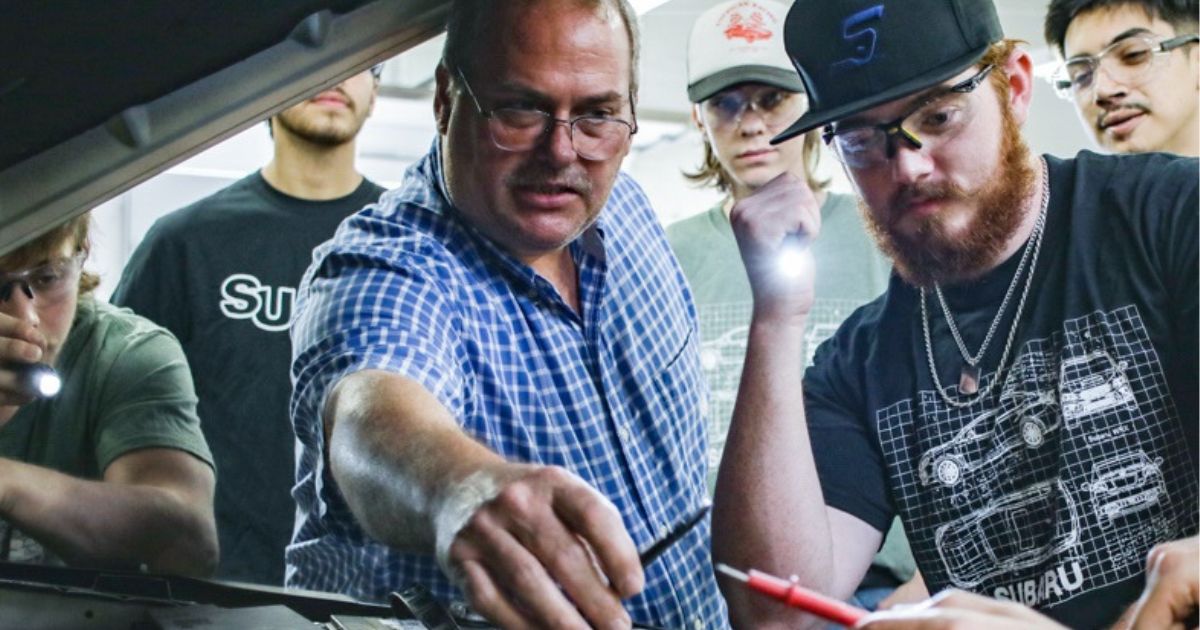
When Mark Gibble looks back on his journey from Soldier to educator, he sees a story rooted in adaptability and purpose. Today, as Assistant Dean at Oklahoma State University Institute of Technology (OSUIT), Gibble draws daily on lessons learned during his Army service—lessons that shaped not only his leadership style but also his commitment to serving those who have served.
Service Lessons
For Gibble, the military’s most lasting impact wasn’t just about structure or rank—it was about people. “The military offers a unique and effective approach to developing soft skills,” he said. “Teamwork, problem-solving, empathy and commitment to shared goals are at the core of what we do.”
That philosophy continues to guide his leadership at OSUIT, where he emphasizes collaboration over hierarchy. “I once had a First Sergeant who told me, ‘Never ask your Soldiers to do something you’re not willing to do yourself.’ I carry that with me,” he explained. “Whether it’s preparing for an event or working alongside staff, I make it a point to be present.”
New Direction
After leaving the Army, Gibble didn’t immediately envision a future in education. “If you had asked me what my goals were when I was discharged, teaching wouldn’t have even made the list,” he admitted. It wasn’t until several years later—thanks in part to the GI Bill—that he enrolled at OSUIT and graduated in 1998 with a degree in automotive technology.
His path took an unexpected turn when a former classmate invited him to teach an evening class. “I served as an adjunct instructor for about three years before being asked to step into my former instructor’s role,” Gibble recalled. “In 2013, I officially joined the OSUIT family. It feels like I’ve come full circle—going from sitting in the classroom to standing at the front of it.”
Campus Legacy
Gibble attributes OSUIT’s strong veteran reputation to the university’s history and culture. Once home to military operations, the campus still honors that legacy through murals, archives and historical exhibits. “We don’t shy away from our history,” he said. “Our reputation as a veteran-supportive campus isn’t just recent—it’s rooted in who we’ve been from the very beginning.”
That legacy continues today through the Office of Military and Veterans Services, which helps students navigate benefit paperwork and connect with campus resources. OSUIT also offers Prior Learning Assessments, awarding academic credit for technical training completed during military service—helping veterans translate experience into progress toward a degree.
Career Readiness
With programs designed for hands-on learning, OSUIT prepares students for careers in industries where veterans naturally excel. “Many veterans already have rigorous technical training,” Gibble noted. “They just need to adapt to civilian terminology and processes.”
He believes veterans’ adaptability sets them apart. “While some students struggle with the transition to college life, veterans bring coping skills and discipline that position them for success,” he said. “They’re goal-oriented and ready to put in the work.”
Leading Others
For Gibble, supporting student veterans isn’t just part of the job—it’s personal. “When I speak with someone considering OSUIT, I share my own story,” he said. “I was once in their shoes. With support and perseverance, everything will be alright.”
Looking ahead, he’s confident that OSUIT’s commitment to veterans will only grow stronger. “Our support for veterans will continue to evolve,” he said. “We remain dedicated to honoring our legacy and helping those who served find their next mission.”
That mission is clear: empowering others to succeed, one veteran at a time.
Read more articles for the Veteran Community here.