

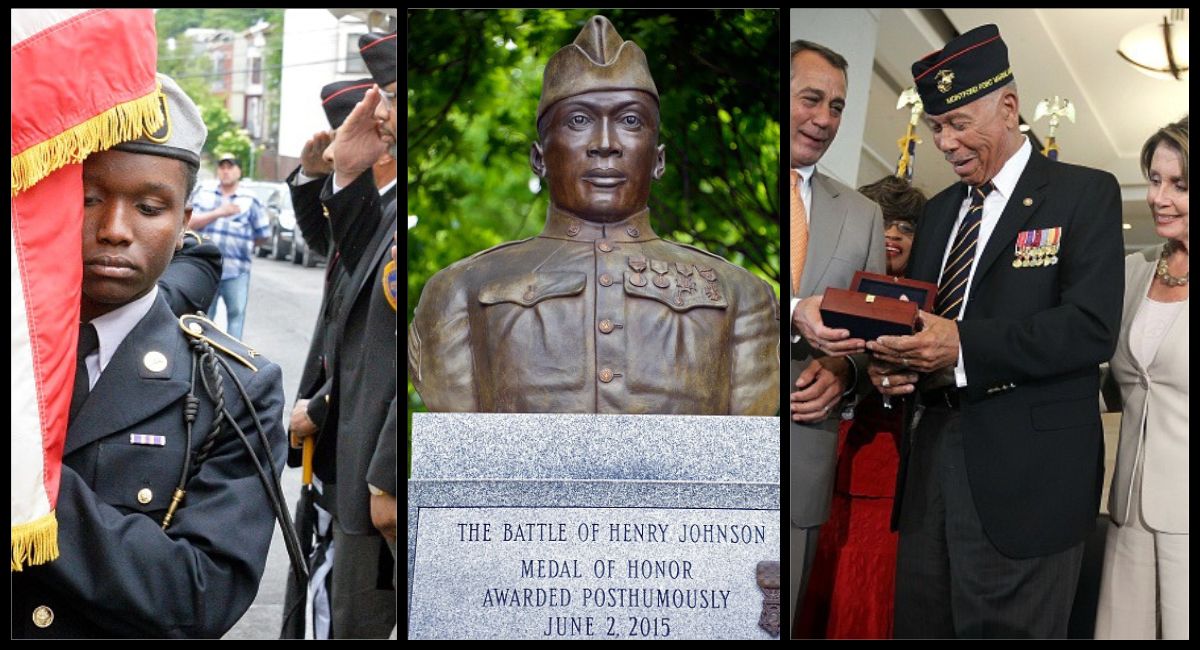
Across generations of conflict and change, Black Americans have worn the uniform of the United States with courage and conviction—often fighting two battles at once: one abroad for freedom and another at home for equality. Their service has helped define the nation’s military legacy, even when recognition came decades too late.
From the muddy trenches of World War I to today’s command centers, Black service members have not only defended the country but have pushed it closer to the ideals it promises. Their stories—sometimes forgotten or overlooked—deserve to be told, remembered and honored.
The Harlem Hellfighters
During World War I, the 369th Infantry Regiment, better known as the Harlem Hellfighters, became one of the most celebrated units of the war. Composed primarily of Black Soldiers from New York, they served under French command because many U.S. units refused to fight alongside them. Yet, in 191 days of front-line duty—longer than any other American unit—they never lost a trench or a man to capture.
Their bravery earned widespread respect in France, where they were awarded the Croix de Guerre, but back home, they returned to segregation and silence. It would take more than a century before the U.S. Army posthumously awarded the Medal of Honor to Sgt. Henry Johnson in 2015, recognizing his extraordinary valor during a nighttime attack in 1918.
Today, their story has finally begun to reach wider audiences. The Harlem Hellfighters are featured in several documentaries and historical projects—including PBS’s The Great War, Smithsonian Channel’s The Unknown Soldiers of WWI and the History Channel’s Harlem Hellfighters: The Forgotten Heroes of WWI. These programs have helped bring overdue visibility to their courage and contributions, ensuring their heroism continues to inspire new generations.
The Montford Point Marines
Two decades later, another barrier fell when the Marine Corps began accepting Black recruits in 1942. They trained separately at Montford Point, North Carolina—a segregated facility established solely for Black Marines.
Despite enduring discrimination and limited opportunities, the Montford Point Marines proved their mettle in the Pacific Theater during World War II. Their service paved the way for President Harry Truman’s 1948 Executive Order 9981, which formally ended racial segregation in the U.S. Armed Forces. In 2012, the surviving Montford Point Marines were awarded the Congressional Gold Medal, an overdue acknowledgment of their courage and trailblazing spirit.
The Tuskegee Airmen
The skies over Europe during World War II also carried a symbol of Black excellence—the Tuskegee Airmen. Trained at Alabama’s Tuskegee Institute, these pilots and support personnel faced skepticism from military leaders who doubted their capability. They proved them wrong with distinction.
Flying escort missions for American bombers, the Airmen became known for their skill and precision. Their success not only contributed to Allied victory but helped dismantle racial stereotypes within the military and beyond. Today, their legacy continues through the Air Force’s ongoing initiatives inspired by their example.
Lasting Impact
That legacy of perseverance continues in today’s military. Leaders such as Gen. Charles Q. Brown Jr., the first Black Air Force Chief of Staff and now Chairman of the Joint Chiefs of Staff, often cite the path paved by those who came before him.
“Those who broke barriers before us didn’t do it for recognition—they did it to serve,” Brown said in remarks following his 2023 appointment. “Our responsibility now is to ensure their sacrifices are remembered and their progress sustained.”
Continuing Legacy
From the 369th Infantry to the Montford Point Marines and the Tuskegee Airmen, each generation of Black service members carried forward a legacy of excellence under extraordinary circumstances. They redefined what patriotism looks like—not through uniformity, but through perseverance, loyalty and courage under pressure.
As the nation reflects each February during Black History Month, their contributions remind us that the fight for freedom has never belonged to one group alone. It has been—and continues to be—a collective effort shaped by those willing to serve.
Read more articles for the Veteran Community here.