

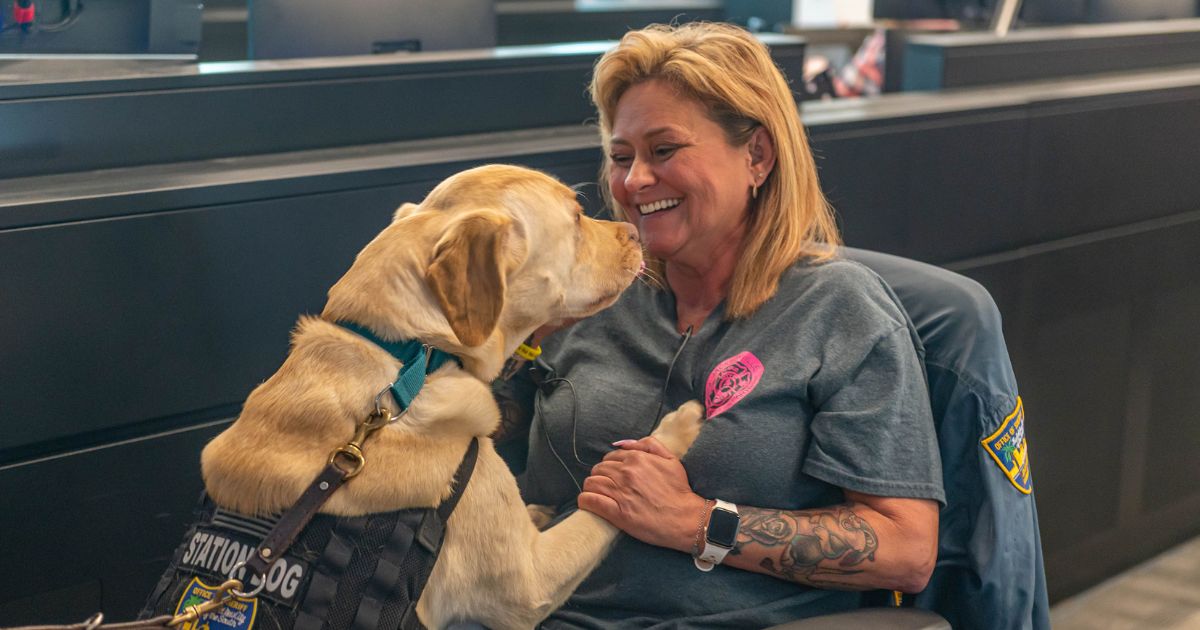
Every morning, when the sun breaks over the quietness of a veteran’s world, a hopeful pair of ears perk up and a warm weight presses gently against their leg. This is the magic of K9s For Warriors—the nation’s largest provider of trained service dogs for military veterans suffering from PTSD and other invisible wounds of war. At a time when nearly 20 veterans tragically take their own lives each day and over 1,000 dogs face euthanasia, this organization brings together two groups in desperate need of support. With unwavering devotion—both four-legged and human—K9s For Warriors creates powerful bonds that heal, restore independence and affirm life, one canine companion and one warrior at a time.

Greg Wells
Greg Wells, pictured above, Director of the Station Dog Program at K9s For Warriors, knows firsthand the toll public safety can take. A disabled veteran and retired first responder, Wells graduated from the Service Dog Program in 2015 before moving into roles from K9 training to program management. His work with Station Dogs began in 2020 after the suicide of a close friend in the first responder community.
“What began as a way to help others cope with loss and grief has become so much more and has affected more lives than we ever anticipated,” Wells says.
Therapy dogs, he explains, are changing workplace culture. Agencies report increased communication, higher productivity, reduced burnout and a safe outlet for officers to decompress after traumatic calls. Yet, the stigma around mental health in public safety remains. “People working in public safety are just that: people,” Wells notes. “They see unimaginable things daily…but they’re not accustomed to people helping them.”
The invisible wounds of service are often hidden but devastating—contributing to record suicide rates among police and firefighters. Wells urges the public to support programs like K9s For Warriors through awareness, volunteering or donations: “The more people that get involved, the more veterans, first responders and dogs we can help.”

For Sheriff TK Waters, pictured above, of the Jacksonville Sheriff’s Office, the Station Dog Program has brought an unexpected kind of unity to his department. It began with Buster, their first therapy dog, and has grown to a team of five canines, each with a unique role—from visiting correctional facilities to comforting officers after critical incidents.
“Jobs associated with law enforcement have inherent ups and downs, and our Station Dogs make the downs a little less daunting,” Waters says. Whether it’s Charlee, the doodle who responds to officer-involved shootings, or Sunny, who lifts morale in corrections, these dogs provide calm, connection and a reason to smile in high-stress environments.
Waters has been most surprised by how the program has strengthened relationships. “Unity and togetherness have been galvanized by the Station Dogs in our halls,” he explains. The presence of these animals has even improved interactions with witnesses and survivors, and inspired the creation of a dedicated Health and Wellness Section within JSO.
He wants the public to remember that first responders are people first: “We are not able to instantly forget the darkness that we see…it must be balanced by things that support our emotional, physical and spiritual well-being.”
Lt. WK Heilmeier
Lt. WK Heilmeier has spent years in public safety at the Akron Children’s Police Department, where balancing the demands of the job with the well-being of his team is a constant priority. That balance got a boost when Ruby, a Station Dog placed through K9s For Warriors, joined the department. “Much like our working dogs, the Station Dogs have become trusted partners—enhancing officer wellness, strengthening team cohesion and contributing to a more resilient and responsive public safety environment,” Heilmeier says.

Ruby, pictured above, is one of five dogs serving across the department’s two campuses, but she’s the one most often at Heilmeier’s side—visiting dispatch, greeting officers and offering comfort after stressful shifts. “What surprised me most is how intuitive and emotionally intelligent these dogs are. They seem to know exactly who needs support and gravitate toward them without prompting,” he explains.
Heilmeier knows the toll of the work isn’t usually from one incident, but from “death by a thousand cuts” over years of service. In a profession where seeking help is often stigmatized, Ruby’s quiet companionship has become a lifeline—proving that a wagging tail and a moment of connection can help carry even the heaviest burdens.
Read more articles for the Veteran Community here.