

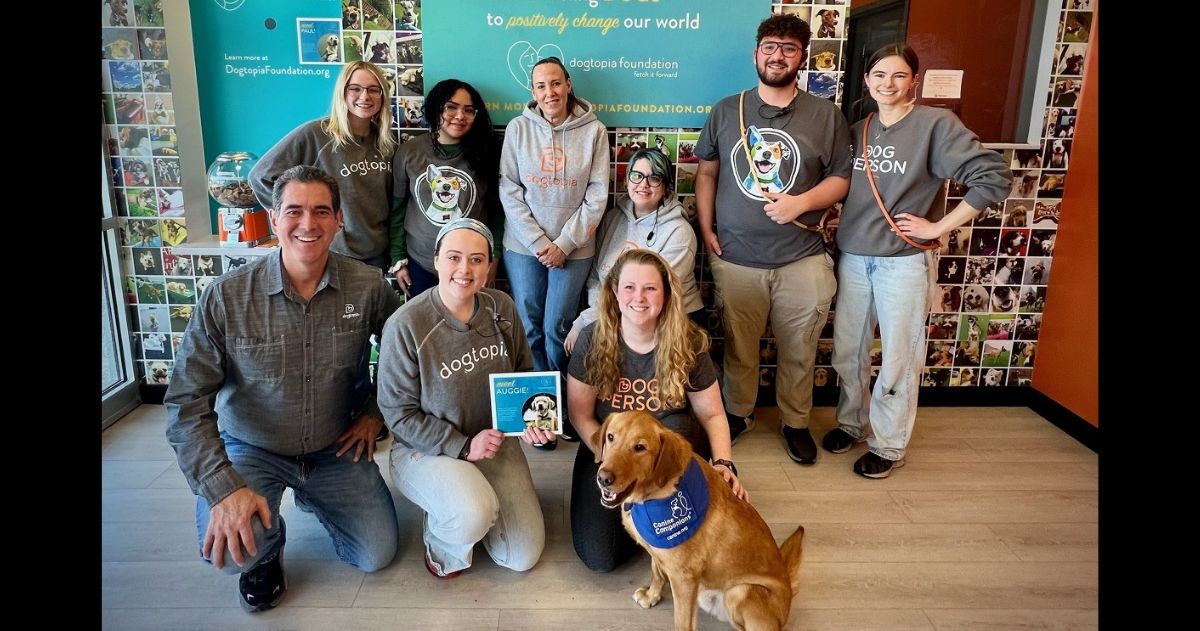

When Liz Meyers talks about the Dogtopia Foundation, she returns to a simple belief: dogs have the power to change lives. That philosophy has shaped Dogtopia since its earliest days as a dog daycare, boarding and spa franchise, and it now serves as the foundation for a nationwide movement supporting veterans, students and adults with autism. At the center of that work is a growing commitment to providing highly trained service dogs to veterans—an effort that has already reached a significant milestone.
Community Milestone
This year, the Dogtopia Foundation surpassed $5 million raised. For Meyers, the number is more than a financial benchmark. It represents thousands of families, daycare owners and frontline teams who have rallied behind a single mission: “to enable dogs to positively change our world.” In practice, that means confronting the real challenges communities across the country face, including the long wait times veterans experience when seeking a service dog.
Grassroots Support
The heart behind that $5 million came from countless small acts across a franchise network of more than 200 locations—and from individuals who pushed themselves far beyond expectation. In Iowa, Dogtopia of Waukee owner Jon Renaud, a 20-year Army veteran, bicycled 449 miles across the state during RAGBRAI to raise support for the cause. In Wisconsin and Minnesota, regional manager Jordan Cerrillo spent nearly a year training for a 101-mile ultramarathon despite having no background in long-distance running, aiming to fund more service dogs for veterans. In California, Sacramento–Nimbus Winery owners Mike and Terri Wilson turned neighborhood fundraisers into community-wide commitments.
These moments, Meyers says, reflect the culture that exists inside every Dogtopia location. Staff members wear shirts that read “Dogs Save Lives” not for branding, but because they’ve seen firsthand what a trained service dog can do. Many have met the veterans whose lives have been reshaped by the dogs their fundraising helped sponsor.
Partnerships
Behind that impact is a careful approach to partnership. The Dogtopia Foundation collaborates only with organizations that demonstrate excellence, integrity and national reach. Each of its service dog partners also works with Dr. Maggie O’Haire of the University of Arizona’s College of Veterinary Medicine, whose SERVES and SERVES+ studies are among the most significant research efforts examining how service dogs may support veterans with PTSD. Their participation, Meyers says, reflects a commitment not just to training service dogs, but to strengthening the scientific foundation that could influence veteran care for years to come.
Real Impact
The Foundation maintains close involvement from the moment funding is provided to the day a dog graduates and is paired with a veteran—and often well beyond. Training timelines vary by partner, but the process is extensive, covering months of foundational and specialized skills designed to support veterans with PTSD or mobility challenges. Throughout that journey, the Foundation receives progress updates and often attends virtual graduation ceremonies. These updates are shared across Dogtopia daycares, ensuring teams can see the direct impact of their efforts.
Matching a veteran with a service dog is a deliberate, highly individualized process managed by training organizations. Lifestyle, home environment, energy level, daily routines and mobility needs all play a role. When that pairing is correct, Meyers says, the outcome can be profound. Many veterans, she notes, describe their service dogs in simple terms: “They saved my life.”
Future Commitment
Looking ahead, Meyers sees a pivotal decade emerging. As Dr. O’Haire’s research expands, clinical acceptance of service dogs is expected to grow, and future funding models may shift, potentially reducing the wait times that keep many veterans in limbo. At the same time, schools across the country are requesting more therapy dog support as student anxiety rises. By investing in both service and therapy dog programs, the Foundation is supporting veterans today while also strengthening the pipeline that will serve communities tomorrow.
In every case, Meyers says, the mission remains the same—enabling dogs to change lives, one partnership at a time.
Read more articles from U.S. Veterans Magazine here.