

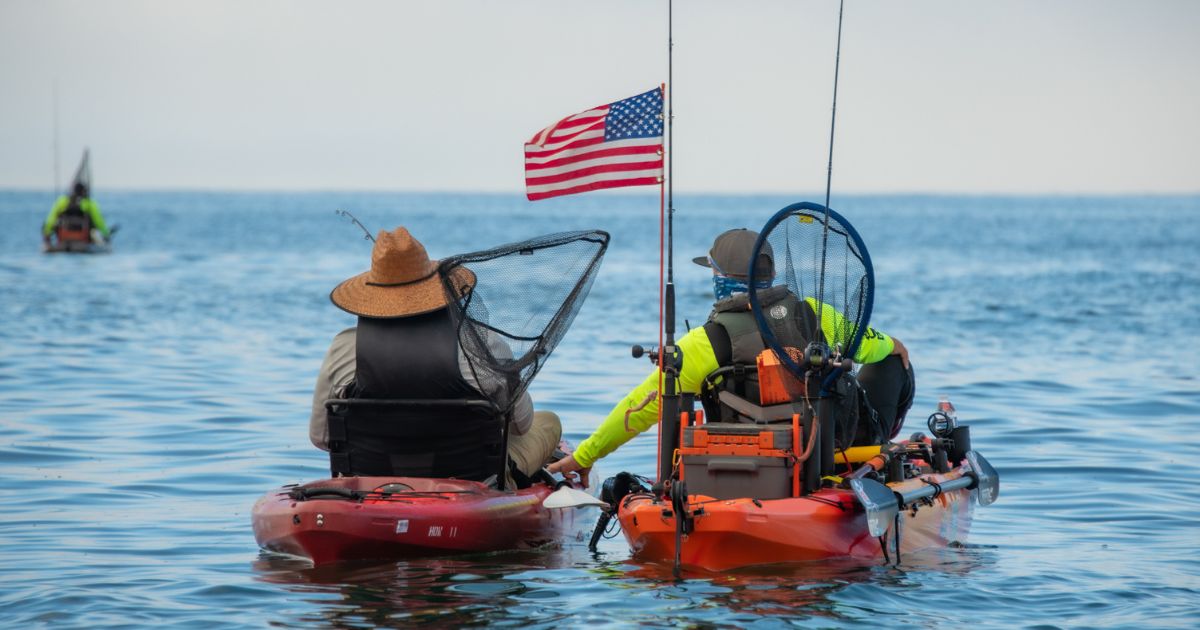

When Air Force veteran Jim Dolan first launched a kayak with a few wounded service members on a quiet Texas lake in 2007, he wasn’t starting a movement—at least not intentionally. He and a handful of fellow kayak fishing enthusiasts simply wanted to give back to the military community they loved. Yet that day at Brooke Army Medical Center in San Antonio sparked something far larger: a nationwide effort that would eventually reach more than 85,000 veterans, first responders and family members.
Their vision evolved into Heroes on the Water (HOW), a nonprofit built around three simple words: Paddle. Fish. Heal. The idea is straightforward but profound—use the serenity of the water and the rhythm of paddling and fishing to help those who’ve endured trauma reconnect with themselves and others.
Healing in Motion
Since its founding, Heroes on the Water has grown into a network of volunteer-led chapters across the United States. Each chapter offers free kayak fishing experiences designed for relaxation, camaraderie and personal renewal. No experience is required, and all equipment is provided.
But the real secret to the program’s success lies in its judgment-free, peer-led approach. “You don’t have to talk about what you’ve been through,” a HOW volunteer explained. “The water does the talking.” That quiet reflection, combined with physical activity and community connection, helps participants rediscover a sense of purpose often lost after leaving military or public service.
Research supports what participants feel. In partnership with Texas State University’s Operation Early Impact, HOW has documented measurable reductions in stress and anxiety among participants—more than 90% report positive emotional and relational changes after just one event.
Expanding the Mission
In 2018, Heroes on the Water broadened its reach to include first responders and their families. The decision recognized a shared truth: those who serve in public safety often face the same high-stress, high-trauma environments as military personnel. Many are veterans themselves.
This expansion was met with enthusiasm, as police officers, firefighters and EMTs found similar healing through shared experiences on the water. The organization’s leadership emphasizes that everyone who serves deserves a chance to recharge, reconnect and heal together.

Families at the Center
From the beginning, Heroes on the Water has understood that healing doesn’t happen in isolation. It was one of the first veteran service organizations to welcome families into its programs, recognizing that the invisible wounds of service ripple outward.
Family-inclusive outings allow spouses and children to share in nature’s calm, creating space for togetherness and mutual understanding. The low-impact nature of kayak fishing makes it accessible to nearly everyone, ensuring no one is left on the shore.
Looking Ahead
Today, Heroes on the Water continues to expand its reach, opening new chapters across the country and deepening its partnerships with VA and Department of Defense hospitals through specialized Therapeutic Programs. These programs integrate recreational therapy into the recovery process for veterans managing physical injuries, post-traumatic stress and other emotional challenges.
In a health care landscape where many veterans face barriers to timely or adequate mental health care, HOW provides something invaluable: a bridge between clinical treatment and community connection.
Message for America
Heroes on the Water’s mission rests on a simple truth: the battle doesn’t end when service members return home. Many veterans and first responders continue to fight unseen struggles—post-traumatic stress, depression, loneliness or a loss of identity. Traditional treatment can’t always reach those wounds.
That’s where programs like HOW step in. The quiet glide of a kayak, the cast of a line and the shared silence among peers do more than calm the mind—they remind participants they are not alone.
As Heroes on the Water continues to grow, it does more than provide recreation. It restores connection, purpose and community—one paddle stroke at a time.
All photos: COURTESY OF HOW
Read more articles for the Veteran Community here.